
Should You Replace Your Roof Before Selling Your Maine Home?
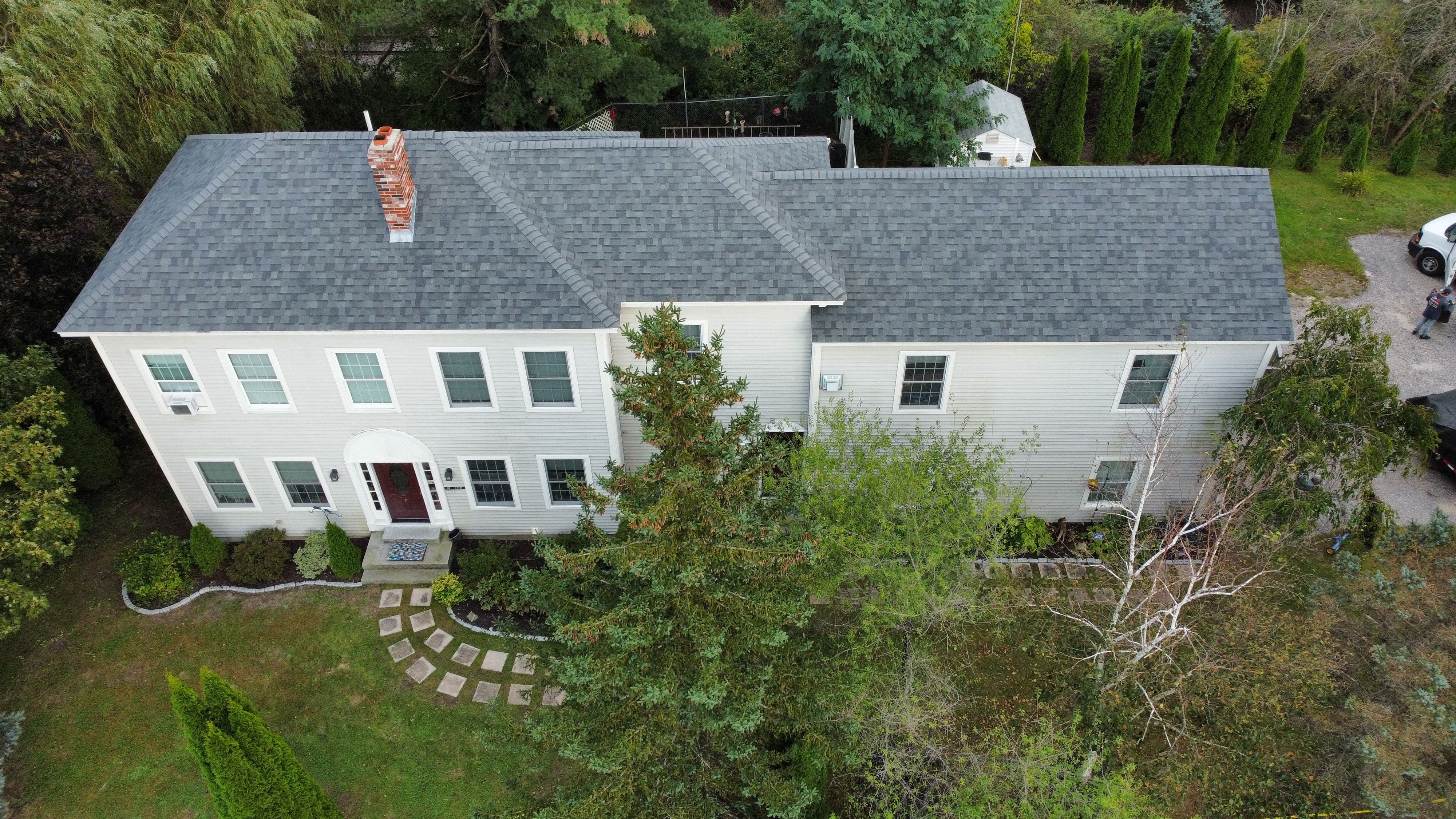
Updated November 17, 2026. Superior Roofing, 525 Riverside St, Portland, ME 04103.
Should I replace my roof before selling? We hear that question a lot from homeowners getting ready to list in the spring. Picture a Cape in Portland with a 20-year-old roof and an April listing date. Replace it, and you spend money on a house you’re about to leave. Skip it, and a buyer’s inspector or lender may raise it for you, at the worst point in the sale.
At Superior Roofing, we work on roofs from Portland to Casco and Alfred, and the right call depends on the roof in front of us. Below, we cover what a buyer’s appraiser and inspector check, how to tell whether your roof needs replacing, and what a new roof costs against what it adds to the price. We also cover when a repair or a credit makes more sense, what Maine sellers have to disclose, and how to fit a replacement in before spring listing season.
Direct Answer
You don’t have to replace a roof before selling a Maine home. But on a buyer’s FHA appraisal, a roof that leaks gets flagged for repair, and one with less than two years of life left makes the appraisal subject to a professional roofer’s inspection [1]. Fix or replace that roof before listing. For wear without leaks, a credit can work.
TL;DR
- An FHA appraiser flags a roof that lets water in, and a roof with less than two years of life left sends the sale to a professional roofer’s inspection [1].
- VA sets no fixed number of years. The roof has to keep moisture out and offer reasonable future use [2].
- A roof certification is a roofer’s written report on condition and remaining life. It isn’t a warranty.
- In New England, an asphalt reroof recouped 62.6% of its $35,701 cost at resale in the 2025 Cost vs Value Report [3].
- Maine sellers must disclose known defects, and a roof leak you know about counts, “as is” or not [4][5].
- The 2021 code Maine uses doesn’t allow a new layer over a roof that already has two [6][7].
One liner: Have the roof checked before the buyer’s appraiser does, then repair, credit or replace based on what you find.
In this article13 sections
- 01Key Numbers
- 02Should I Replace My Roof Before Selling? The Short Answer
- 03What a Buyer’s Appraiser and Inspector Check, and What a Roof Certification Means
- 04Does Your Roof Need Replacing Before You List?
- 05New Roof Before Selling House: Cost vs Sale Price
- 06Repair, Credit or Replace?
- 07What Maine Sellers Have to Disclose About the Roof
- 08A Fast Replacement Before Spring Listing
- 09Get Your Roof Ready Before You List
- 10Frequently Asked Questions
- 11Definition Bank
- 12Quick Facts
- 13Sources
Key Numbers
| Stat | What it measures | Source |
|---|---|---|
| 2 years | Remaining roof life an FHA appraiser looks for | HUD Handbook 4000.1, 2026 [1] |
| 62.6% | Share of an asphalt reroof’s cost recouped at resale in New England | Cost vs Value Report, 2025 [3] |
| $35,701 | Average asphalt reroof cost in New England | Cost vs Value Report, 2025 [3] |
| $22,346 | Resale value that reroof added in New England | Cost vs Value Report, 2025 [3] |
| 67.5% | Share recouped nationally for the same job | Cost vs Value Report, 2025 [3] |
| 30 squares | Roof size in the report’s standard job (3,000 square feet) | Cost vs Value Report, 2025 [8] |
| 40°F | Temperature above which shingles handle most easily | GAF TAB-R-133, 2024 [9] |
| 2 layers | Existing layers at which a new layer on top isn’t allowed | 2021 International Residential Code [6] |
Should I Replace My Roof Before Selling? The Short Answer
In short: Replace a leaking or failing roof before you list. Repair one bad spot, or offer a credit for wear.
Replace your roof before selling when it leaks, is visibly failing, or has less than two years of life left, since an FHA appraiser has to flag a roof that falls short of that [1]. When the problem sits in one area, a repair or a buyer credit usually costs less.
So you don’t always need to replace your roof before selling your home. There are three paths: repair what’s broken, offer the buyer a credit toward a new roof, or replace the whole roof before you list. Our rule is simple. Fix what a buyer’s lender or inspector will catch, and price in what they won’t. The next sections show how to tell which path fits your house.
What a Buyer’s Appraiser and Inspector Check, and What a Roof Certification Means
In short: An FHA appraiser asks whether the roof keeps water out and has two years of life left. A leak gets flagged for repair, and under two years sends the sale to a roofer’s inspection [1].
If your buyer uses an FHA loan, the appraiser has to flag a roof that doesn’t keep water out or has less than two years of life left. When it falls short of two years, the appraisal is made subject to an inspection by a professional roofer [1]. Most “will my roof pass?” worries come down to that one rule.
How an FHA or VA appraiser looks at the roof
An appraiser isn’t a home inspector. For a VA loan, the roof covering has to keep moisture out and provide “reasonable future utility, durability, and economy of maintenance,” and the appraiser isn’t required to climb onto the roof [2]. VA doesn’t set a fixed number of years. In September 2026, HUD posted a proposal that would remove the separate FHA roof section and fold roof problems, such as an active leak or curled, cupped or missing shingles, into the appraiser’s condition ratings. It hasn’t been adopted, and lenders still follow the current handbook [10].
| Check | Who checks | What it asks about the roof | Set number of years |
|---|---|---|---|
| FHA appraisal | The lender’s FHA appraiser | Keeps moisture out, with life left [1] | Two years [1] |
| VA appraisal | A VA appraiser | Keeps moisture out, reasonable future use [2] | None set [2] |
| Home inspection | An inspector the buyer hires | Condition of shingles, flashing and attic | None |
What is a roof certification?
When an FHA appraisal comes back subject to a roofer’s inspection, the roofer’s written report on the roof’s condition and remaining life is what most people call a roof certification. You’ll often hear it called a 2 year roof certification, because two years is the FHA line [1].
Roof inspection before buying a house
A roof inspection before buying a house is the buyer’s own check, separate from the appraisal. It doesn’t approve or deny the loan. But what the inspector writes about shingles, flashing and attic stains often turns into the buyer’s repair requests.
Picture two listings on the same street. One seller skips the roof, and the FHA appraisal comes back subject to a roofer’s inspection a few weeks before closing. The other seller has a roofer look first, fixes what turns up, and lists with the answer in hand. If you’d rather be the second seller, we can look at your roof during a free estimate and tell you what it needs.
Does Your Roof Need Replacing Before You List?
In short: Look for missing or curled shingles, bare spots, rusted flashing, ceiling stains and sagging, then check how much of the roof shows them [11].
Start with what a buyer’s inspector will see on the first walk around the house. FORTIFIED, the home program of the Insurance Institute for Business & Home Safety (IBHS), lists these among the common signs a shingle roof needs attention [11]:
- Shingles that are missing, cupped or curled
- Blisters, or patches where bare asphalt shows through
- Large areas where the granules have worn off
- Rusted gutters or flashing
- Water-stained ceilings or other signs of a leak inside
- A roof line that sags or looks wavy
Here’s a quick test. After the next rain, look at the ground where your downspouts empty. A fan of dark grit there is granules washing off the shingles.
How much of the roof shows these signs matters as much as which ones you find. A few curled shingles over the porch is a different job from curling on every slope. FORTIFIED flags a sagging or wavy roof as a serious issue to have inspected right away [11]. For a closer look at each warning sign on local homes, see our guide to the signs you need a new roof.
Dig out the roof’s age too, from old invoices, permit records, the inspection report from when you bought, or your closing papers. Buyers and their inspectors will ask, and “about 20 years” is a weaker answer than a date.
New Roof Before Selling House: Cost vs Sale Price
In short: A new asphalt roof in New England recouped 62.6% of its cost at resale in the 2025 report. The rest of the payoff is a smoother sale [3].
A new roof before selling a house rarely pays for itself in the sale price. In the 2025 Cost vs Value Report, an asphalt shingle replacement in New England recouped 62.6% of its cost at resale, below the national figure of 67.5% [3].
| Project | Region | Job cost | Resale value | Cost recouped |
|---|---|---|---|---|
| Asphalt shingle replacement | New England | $35,701 | $22,346 | 62.6% |
| Asphalt shingle replacement | National | $31,871 | $21,501 | 67.5% |
| Metal roof replacement | New England | $56,282 | $21,904 | 38.9% |
| Metal roof replacement | National | $51,865 | $25,972 | 50.1% |
Those figures describe one standard job: tearing the old roof off to bare sheathing and installing 30 squares (3,000 square feet) of asphalt shingles with new underlayment, drip edge and flashing [8]. A small Cape or a steep, cut-up Victorian will land somewhere else. Our guide to roof replacement cost in Portland walks through local numbers.
Run the math on the New England figure, and about $13,355 of a $35,701 roof doesn’t come back in the price. What a sound roof buys you is a smoother sale: no “subject to” appraisal, less for the buyer’s inspector to write up, and one less reason to ask for money off. Whether that’s worth the gap depends on what shape your roof is in, which is where the next section comes in.
Repair, Credit or Replace?
In short: Repair one bad spot, credit a worn roof that doesn’t leak, and replace a roof that leaks in several places or is near the end of its life.
Once you know what shape the roof is in, the choice usually comes down to three paths. Here’s how they compare for a seller.
| Path | When it fits | What it costs you up front | What the buyer’s side sees |
|---|---|---|---|
| Repair | The trouble is in one spot, like a flashing leak or a few blown-off shingles, and the rest of the roof has life left | The repair bill only | A fixed problem, with a receipt to show |
| Credit at closing | The roof is worn but not leaking, and you’d rather not manage a project while you move | Nothing until closing, then the agreed amount comes off your proceeds | A worn roof and money toward replacing it |
| Replace | The roof leaks in more than one place, sags, or is near the end of its life | The full job, before you list | A new roof, and nothing for the inspector to flag |
A roof credit works best with a buyer paying cash or using a conventional loan. It doesn’t answer an FHA appraiser’s roof question. If the appraisal comes back subject to a roofer’s inspection, that inspection still has to happen [1]. A credit moves the cost. A repair or a new roof removes the problem.
One more check before you pay out of pocket. If wind or a storm did the damage, your homeowners policy may cover it. Maine’s Bureau of Insurance says homeowners policies generally cover storm damage, including wind [12]. Call your insurer first, because the Bureau also warns that permanent repairs made before the adjuster inspects can get the claim denied [12].
Either way, a credit is only as good as the number behind it, so price it from a written roofer’s estimate rather than a guess. If you’re not sure whether your roof calls for a fix or a full job, start with how we decide between repair or replace on Portland homes.
What Maine Sellers Have to Disclose About the Roof
In short: A roof leak you know about is a known defect under Maine law, and it goes on the disclosure form even when you sell as is [4][5].
Maine law requires the seller of a home to give buyers a property disclosure statement, and one item it must cover is “any known defects” [13]. The roof isn’t named, but the definition reaches it. A known defect is a condition the seller knows about that significantly lowers the property’s value, significantly affects the health or safety of future occupants, or, if not repaired, significantly shortens the expected normal life of the home [4]. A roof you know leaks fits that description.
Selling “as is” doesn’t get around it. The Maine Association of REALTORS tells sellers they still have to disclose known material defects, “as is” wording or not [5]. A credit at closing doesn’t change that either. The leak still goes on the form.
What you can change is what the form says. “Roof leaked over the kitchen, repaired in March, invoice attached” reads a lot better to a buyer than “leaks over the kitchen, cause unknown.” If a leak is on your list, fixing it before the form is filled out gives you the better line. Your agent or an attorney can tell you how to word the rest.
A Fast Replacement Before Spring Listing
In short: Book the estimate in winter for an April listing. Cold-weather installs work with hand-sealing, and a third layer isn’t allowed [14][6].
A replacement before listing goes best when it’s planned around the weather, not squeezed in after the listing photos.
Plan backward from your list date
Spring listing season in Maine runs into the tail end of winter, so the roof has to be planned before the yard sign goes up. If you want to list in April, book the estimate in winter. That gives you time to settle the scope and the shingle color, and lets the crew start on the first workable stretch of weather. Ask for the invoice and a few photos when the job wraps up. Both belong in the listing file.
What a winter install involves
Shingles can go on in the cold. GAF, the shingle maker, says there’s no practical lower temperature limit as long as the right precautions are taken, though shingles handle most easily above 40°F [9]. The catch is sealing. GAF calls for hand-sealing shingles installed in cold weather, in fall or winter, and says a shingle that fails to seal from too little heat isn’t a manufacturing defect [14]. If your roof goes on in February or March, ask how the crew will seal it.
Why a second layer may be off the table
A quick overlay can look like the cheap way to fix a roof before listing. Maine’s building code uses the 2021 International Residential Code (IRC) [7], which doesn’t allow a new layer over a roof that already has two or more [6]. Some older homes already have two, and then the only option is a tear-off. For what that job involves on most local homes, see our shingle roof replacement page.
Get Your Roof Ready Before You List
In short: Call our Portland office at 207-702-7663 for a free estimate before your listing goes live.
The best time to find out what your roof needs is before a buyer’s inspector or appraiser does. Call our Portland office at 207-702-7663, or stop by 525 Riverside St, Portland, ME 04103. Tell us the address, your target list date and the roof’s age if you know it. We’ll look at the roof, tell you whether it needs a repair or a full replacement, and give you a free estimate. If you’d rather offer a credit, that estimate gives you a real number to work from. We also serve sellers from our Casco and Alfred offices.
Frequently Asked Questions
In short: Roof age alone doesn’t decide it, a certification isn’t a warranty, known leaks get disclosed, and winter installs need hand-sealing.
Should I replace the roof before selling the house if it’s 20 years old?
Not on age alone. What matters is whether it keeps water out and has life left. An FHA appraiser flags a roof with less than two years remaining [1], and a worn roof gives any buyer room to negotiate. We can look at it during a free estimate and tell you which side of that line it’s on.
Does a roof certification mean the roof won’t leak?
No. A roof certification is a roofer’s written opinion of the roof’s condition and remaining life on the day it was checked. It isn’t a warranty. For an FHA sale, it’s how a roof flagged by the appraiser gets cleared by a professional roofer [1].
Can I sell my house in Maine with a leaking roof?
Yes, but you have to disclose it. Maine law requires sellers to list any known defects on the property disclosure statement [13], and a leak you know about counts [4]. Expect buyers to price it in, and expect an FHA appraiser to flag it. Fixing the leak first gives you a cleaner form.
Can I put new shingles over the old ones before I sell?
Only if the roof has fewer than two layers now. The 2021 building code Maine uses doesn’t allow a new layer over a roof that already has two or more [6]. A second layer also hides the roof deck, so neither you nor the buyer’s inspector can see its condition.
Can you replace a roof in a Maine winter?
Yes, with the right precautions. Shingles can go on in the cold, and GAF calls for hand-sealing shingles installed in fall or winter, since the factory sealant needs heat to bond [14]. Book your free estimate in winter, and the job can be scheduled for the first good stretch of weather.
Definition Bank
| Term | Meaning |
|---|---|
| FHA appraisal | The valuation an FHA lender orders, which also checks the home against FHA property rules |
| Remaining physical life | How long the roof covering can keep working before it needs replacing |
| Professional roofer inspection | The roof check an FHA appraisal is made subject to when the roof has under two years left |
| Roof certification | A roofer’s written report on a roof’s condition and remaining life on the day it was checked |
| 2 year roof certification | A roof certification stating at least two years of remaining life, the FHA line |
| VA Minimum Property Requirements | VA’s standards for a home financed with a VA loan, including the roof covering |
| Home inspection | A check of the home’s condition that the buyer orders, separate from the appraisal |
| Credit at closing | Money the seller gives the buyer at closing in place of doing a repair |
| Known defect | Under Maine law, a condition the seller knows about that significantly lowers value, affects health or safety, or shortens the home’s life |
| Property disclosure statement | The written form a Maine seller gives buyers, including any known defects |
| Roof recover | Putting a new layer of roofing over the existing one, also called an overlay |
| Tear-off | Removing the old roofing down to the roof deck before installing a new roof |
| Hand-sealing | Bonding shingles with roofing cement when it’s too cold for the factory sealant to activate |
| MUBEC | The Maine Uniform Building and Energy Code, which adopts the 2021 International Residential Code |
Quick Facts
HUD Handbook 4000.1
| Property | Value |
|---|---|
| Publisher | U.S. Department of Housing and Urban Development (FHA) |
| Roof rule | Appraiser reports a roof that doesn’t keep moisture out; under two years of remaining life makes the appraisal subject to a professional roofer’s inspection (Section II.D.3.g) [1] |
| Last revised | August 12, 2026 |
| Pending change | September 22, 2026 proposal to remove the section and rely on condition ratings; not adopted [10] |
VA Pamphlet 26-7, Chapter 12
| Property | Value |
|---|---|
| Publisher | U.S. Department of Veterans Affairs |
| Roof rule | Keep moisture out; reasonable future utility, durability and economy of maintenance [2] |
| Set number of years | None |
| Appraiser on the roof | Not required [2] |
Cost vs Value Report 2025
| Property | Value |
|---|---|
| Publisher | Zonda (Journal of Light Construction) |
| Asphalt, New England | $35,701 cost, $22,346 resale, 62.6% recouped [3] |
| Asphalt, national | $31,871 cost, $21,501 resale, 67.5% recouped [3] |
| Job | Tear-off and 30 squares of asphalt shingles [8] |
Maine property disclosure law
| Property | Value |
|---|---|
| Statutes | 33 M.R.S. Sections 171 and 173 |
| Roof named | No |
| What applies | Any known defects [13], as defined in Section 171 [4] |
| As is | Doesn’t exempt known material defects [5] |
Superior Roofing, Portland office
| Property | Value |
|---|---|
| Address | 525 Riverside St, Portland, ME 04103 |
| Phone | 207-702-7663 |
| Estimates | Free |
| Other offices | Casco and Alfred |
Sources
- U.S. Department of Housing and Urban Development, FHA Single Family Housing Policy Handbook 4000.1, II.D.3.g, Roof Covering (last revised August 12, 2026)
- U.S. Department of Veterans Affairs, VA Pamphlet 26-7, Lender’s Handbook, Chapter 12, Minimum Property Requirements, Topic 26, Roof Covering (unchanged by Change 46, effective May 1, 2026)
- Zonda, Cost vs Value Report 2025, New England Region
- Maine Revised Statutes, Title 33, Section 171, Definitions
- Maine Association of REALTORS, Residential Property Transaction Booklet (revised 2022)
- International Code Council, 2021 International Residential Code, Chapter 9, Section R908.3.1.1, Roof recover not allowed
- Maine Department of Public Safety, Bureau of Building Codes and Standards, Maine Uniform Building and Energy Code (MUBEC) adopted codes
- Zonda, Cost vs Value Report, Roofing Replacement: Asphalt Shingles, project description
- GAF, Technical Advisory Bulletin TAB-R-133, Temperature Extremes and Fiberglass Asphalt Shingles (rev. February 26, 2024)
- U.S. Department of Housing and Urban Development, Modernization of FHA Minimum Property Requirements, Summary of Proposed Changes (posted September 22, 2026)
- FORTIFIED, a program of the Insurance Institute for Business & Home Safety, 8 Ways to Know If You Need a New Roof (February 8, 2022)
- Maine Bureau of Insurance, Storm Related Claims FAQs
- Maine Revised Statutes, Title 33, Section 173, Required disclosures
- GAF, Technical Advisory Bulletin TAB-R-114, Hand-Sealing Shingles